The Women & Politics Institute (WPI) at American University’s School of Public Affairs (SPA) announced…
Gender will Remain on the Ballot for Women
Rebecca DeWolf
| Oct 1, 2026
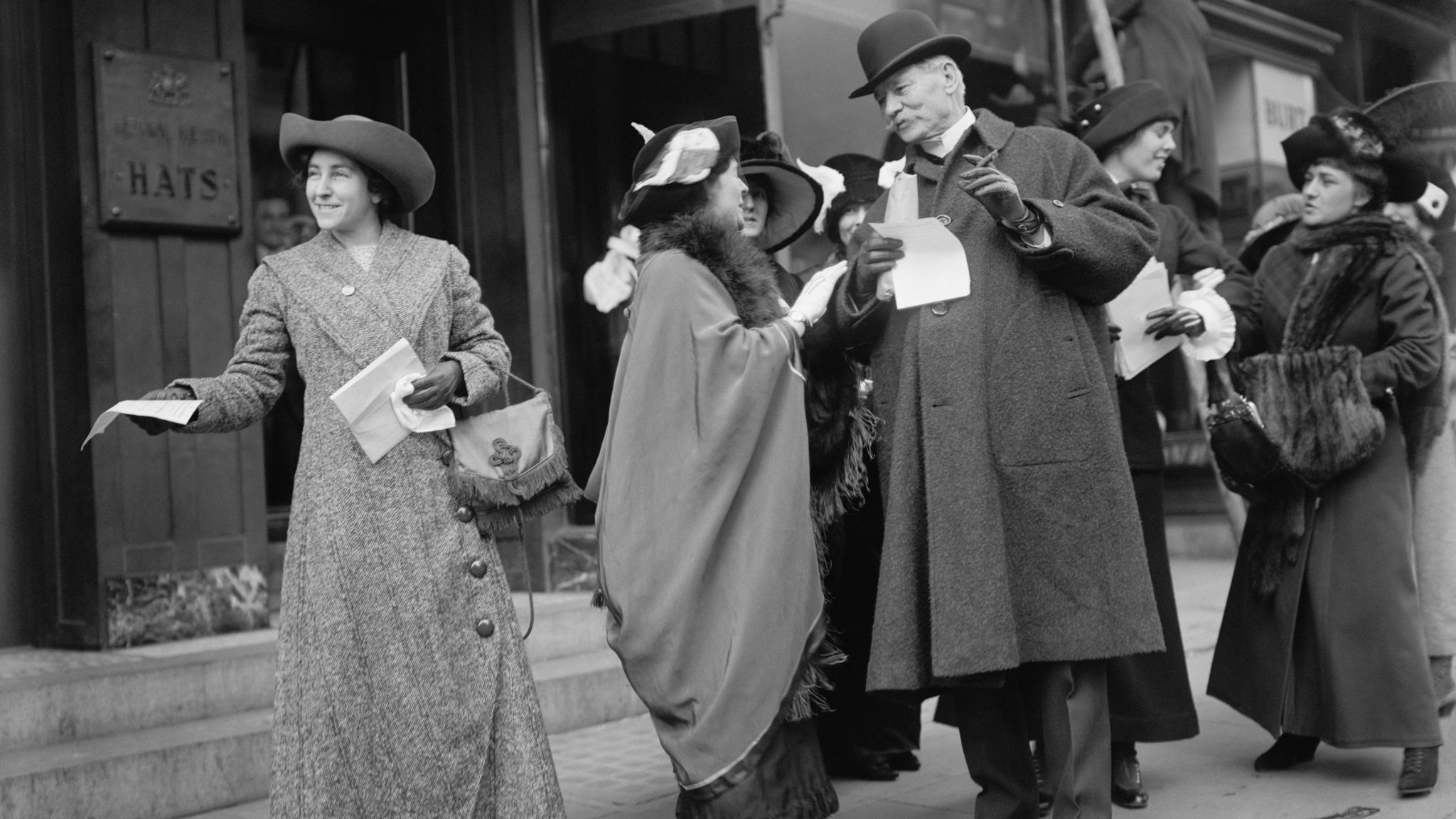
In 1855, influential women’s rights activist Lucy Stone observed in a letter to her close friend, and future sister-in-law, Antoinette Brown, that “It is very little to me to have the right to vote, to own property, if I may not keep my body, and its uses, in my absolute right.” Stone continued: “Not one wife in a thousand can do that now, and so long as she suffers this bondage, all other rights will not help her to her true position.”
Stone’s remarks underscore how nineteenth-century women’s rights activists challenged several of the historical limitations on women’s societal position, including the constraints on women’s bodily autonomy. By the turn of the century, suffrage would come to the forefront of the women’s rights movement, but when the movement first took root in the early-to-mid nineteenth century, its activists pursued an array of goals, one of which was the idea of voluntary motherhood. The concept of voluntary motherhood reflects the movement’s efforts to ensure that pregnancy, childbirth, and motherhood would become matters of deliberate choice for women. For women’s rights activists, voluntary motherhood meant not only women’s right to reject their husbands’ sexual demands but also women’s right to freely choose when and if to have children. As abolitionist and early women’s rights activist Sarah Grimke put it, voluntary motherhood upheld the “right on part of woman to decide when she shall become a mother, how often and under what circumstances.”
Within the nineteenth-century advocacy for voluntary motherhood existed an interesting mixture of both moderate and radical activists. Moderate women’s rights activists called for abstinence from sexual relations altogether when pregnancy was not desired by the woman. Their radical counterparts, in contrast, were more open to separating the expression of sexuality from reproduction. As a result, the more radical activists believed that women’s reproductive self-determination could involve an array of reproductive control techniques including not only abstinence, but also contraceptive devices and methods, and sometimes aborting a suspected pregnancy.
In both the moderate and radical perspectives, the demand for voluntary motherhood flowed from the criticisms of marriage embedded within the women’s rights movement. Women’s rights advocates attacked the institution of marriage because it was governed by the common law tradition of domestic relations, or the doctrine known as coverture. That doctrine had denied women the right to self-ownership. Coverture began at the principle that upon marriage the husband had a right not only to the free domestic labor of his wife, but also to the sexual services of her body. (Marital rape was not considered a crime in the U.S. until the 1970s.) The old law of domestic relations was an institution of economic and sexual disempowerment for women, as it gave husbands authority over their wives in law and in custom. As leading women’s rights activist Elizabeth Cady Stanton wrote in an 1853 letter to Susan B. Anthony, women are “degraded in marriage.” She concluded that the improvement of “marriage is at the foundation of all reforms.” Early women’s rights advocates challenged the doctrine of coverture enfolded in the institution of marriage because it had denied women the right to have full command over their bodies and lives.
In the antebellum period, the primary goal of women’s rights advocates was to fight for the dismantling of the array of sex-based legal restrictions on women that had grown out of coverture. By the late nineteenth century, however, the Civil War, and the subsequent Reconstruction Amendments, had transformed the rights of citizenship in the U.S. by upending the legal structure of chattel slavery. Women rights activists leaped into this complex political landscape to fight for the vote as their primary issue. Most women’s rights advocates had come to believe that all other rights for women would be fragile and tenuous until women had secured a direct, independent relationship to the governance of the country through a constitutionally affirmed right to vote. Despite the remarkable achievements in expanding women’s societal position led by women activists from the nineteenth century onwards, the vote is still the only right that the Constitution explicitly prohibits from being denied or abridged on account of sex. Until the Constitution robustly affirms women’s status as full rights-bearing citizens, gender will remain on the ballot for women, because the vote is the central tool women have for preventing a resurrection of that old legal doctrine that had denied women authority over their bodies and lives.