2018 was a year of incredible firsts for Native women in politics. Voters elected…
She Leads: Progress and Persistent Barriers for Women in Politics
Viva de Vicq
| Oct 6, 2025
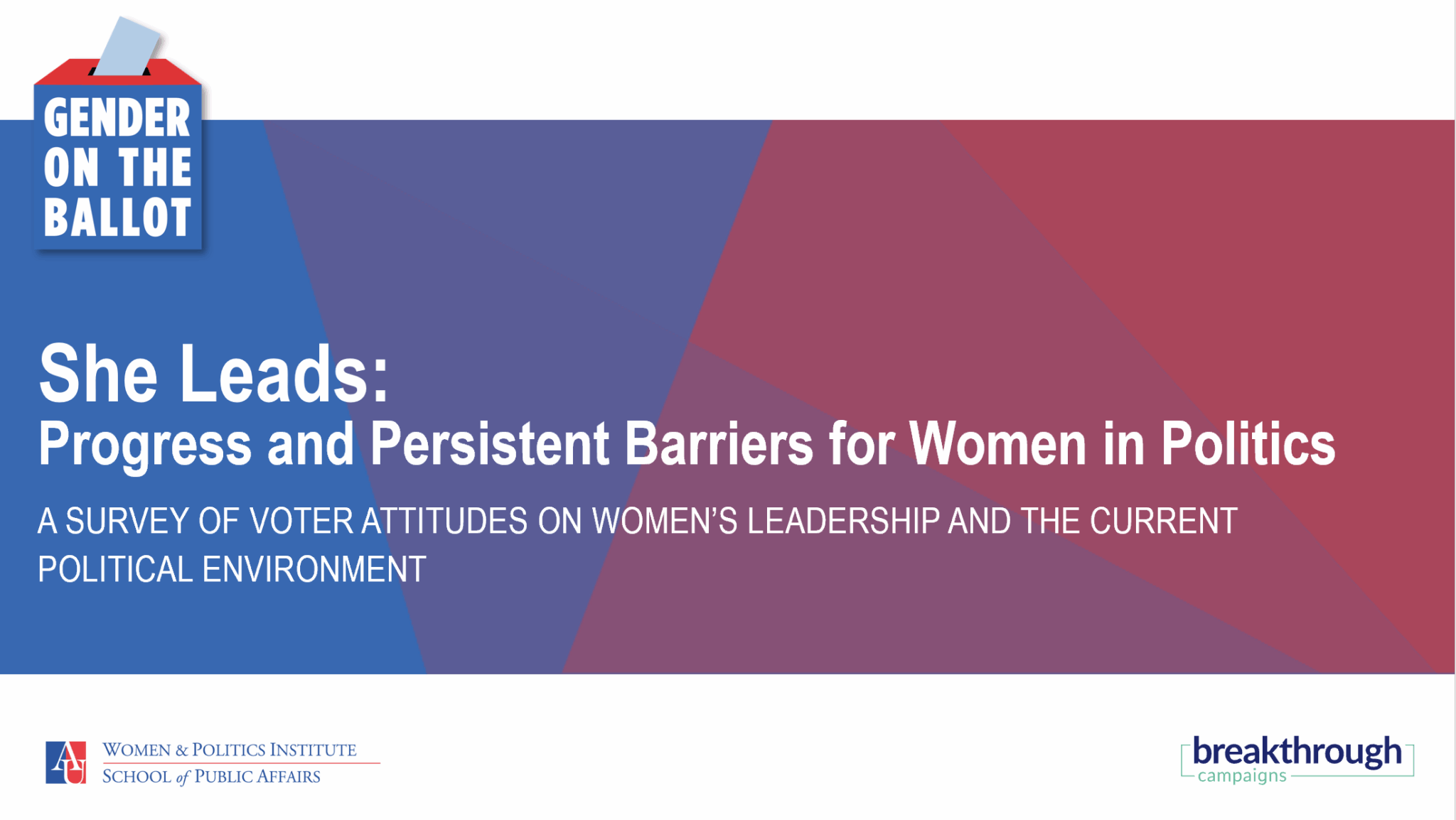
Our recent survey of more than 800 voters across the country revealed both the progress women have made in politics and the barriers that remain.
Voters strongly believe in increased female representation in politics, with a significant 83% believing it’s important to elect more women to office, and 54% feeling there are currently too few women in office. The desire to elect more women is particularly pronounced among Democrats and Gen Z voters (18-34). In order to accomplish higher representation for women, voters place a great deal of importance in institutions that encourage women to run for office, like the nonpartisan AU Women & Politics Institute, with 83% believing they are vital to democracy.
Once women are elected, voters note how they positively impact the country, with 70% believing the government works better when more women serve. Two-thirds of men and four in five women under 50, believe that women in office are better at solving national problems. Women leaders are also seen as more trustworthy when it comes to critical issues like childcare, reproductive rights, and addressing women’s equality.
However, we do see some notable factors still holding women back from achieving these elected positions. After Vice President Kamala Harris’ defeat in November, voters are split on whether she made it easier or harder for a woman to become president in the future, with a plurality of Republicans and Independents believing she made it harder. This feeds directly into a persistent bias for the nation’s commander in chief– four in ten voters, particularly Republicans and younger voters, say they personally know someone who would not vote for a woman president. Those younger voters, who are generally supportive of women in office, are actually the least open age group to electing a woman president.
When envisioning the first woman president, voters define her very narrowly, imagining her as a married Democratic mother under 65 with prior political experience. She also faces an uphill battle, needing to be both “tough” and “likable” at the same time, a hard line for women in office to walk.
This survey paints a compelling picture of progress, showing that voters not only desire more women in leadership but also trust them on pressing issues affecting themselves and their families. Yet stubborn barriers still exist, particularly when we talk about the presidency. How women utilize their strong overall support to overcome those barriers will determine their ability to break through the glass ceiling in 2028 and beyond.
To learn more about this new research, check out our key takeaways, memo, and press release.
Join the Women & Politics Institute on Wednesday, October 8th at 6pm ET for a virtual presentation and discussion as we explore these findings and what they mean for the future of women’s leadership and American politics. WPI Executive Director Betsy Fischer Martin will facilitate the panel discussion with Viva de Vicq, Senior Director of Breakthrough Campaigns, who conducted the survey. Details and registration here.