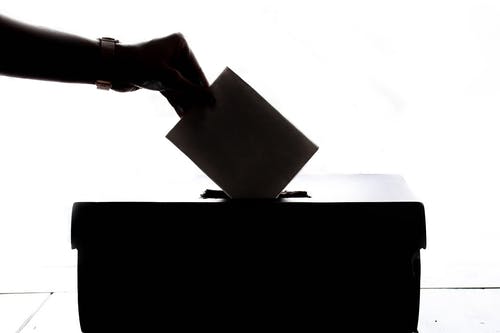
Currently, there are five confirmed woman v. woman gubernatorial races in November this midterm…
Why Women V. Woman Races Are Held to a Different Standard
Amanda Hunter
| Oct 6, 2026

With a record number of women currently running for governor, and a near-record number of women running for the U.S. Senate, there are several high-profile races made up of all-women candidates.
In Minnesota, Democratic nominee Amy Klobuchar faces Republican state House Speaker Lisa Demuth for the governor’s office. In New Hampshire, incumbent Governor Kelly Ayotte (R) faces challenger Cinde Warmington (D). In Oregon, Governor Tina Kotek (D) faces challenger Christine Drazan (R) in a rematch from the 2022 ticket. In Tennessee, incumbent U.S. Senator Marsha Blackburn (R) faces state Representative Gloria Johnson (D), as well as Independent candidate Lauren Pinkston.
At the Senate level, Lt. Governor Peggy Flanagan (D) faces former broadcaster Michelle Tafoya (R) in Minnesota, and in South Carolina Dr. Annie Andrews (D) faces Darline Graham (R).
Previous research from the Barbara Lee Family Foundation shows that when women run against each other, voters demand to know why either woman is qualified. Each woman must show voters what they have accomplished on behalf of voters. When two women run against each other, the first woman to attack her opponent may pay a price with voters. When it comes to “going negative,” voters expect women to “rise above the fray” and stay away from “politics as usual.” Voters expect men to show traits like dominance and aggression, but they expect women leaders to show empathy and civility.
Criticizing an opponent for not debating has been a common theme in these races. Research shows that voters judge women for how their campaigns are managed, and see that as a reflection of how they will govern. Attacking a woman for not debating could play into stereotypes that she is not prepared, not tough enough, or perhaps even too arrogant (and therefore unlikable).
In Tennessee, Blackburn’s opponents criticized her for not being willing to debate, using a duck emoji in coverage by The Tennessee Holler to say she is “ducking” voters. In the Minnesota governor’s race, Lisa Demuth (R) had the same approach toward her opponent, Amy Klobuchar (D), as highlighted by Alpha News MN. And in the Oregon governor’s race, Christine Drazan (R) stated on Christine Drazan’s Campaign Channel that her opponent Tina Kotek (D) wouldn’t debate “because she knows her record is indefensible”. In South Carolina, Senate candidate Dr. Annie Andrews pointed out opponent Darline Graham’s initial hesitancy to debate (after a major gaffe during her primary debate dominated headlines), which implied she may lack readiness and policy expertise. Graham finally agreed to a debate to be held on October 11, reported by South Carolina Public Radio.
One encouraging finding from the Shared Hurdles Report in 2022 was that voters said they no longer saw women as a novelty on the campaign trail. When voters see women running against each other as major-party candidates, it continues to break down stereotypes and normalize electing women as leaders.